American Woodcock

This morning returning from yoga I stopped several times to pick up cans that had been tossed aside along the road. A gesture that was rewarded, as my truck climbed the mountain, with the sight of an American Woodcock (Scolopax minor), slowly dancing across the road.

What a joy to see! This chunky little speckled brown bird had such personality, taking one firm step, rocking back and forth, another firm step, rocking back and forth, all the way across the gravel strewn road giving me and my approaching truck no notice at all.

The American Woodcock is 10 to 12 inches long from the tip of its tail to the end of its 2.75 inch long bill. That prehensile bill is used to poke into moist soil searching for earthworms and other invertebrates. They also eat seeds. Those oddly placed eyes give this little bird the ability to see what is going on as it probes the soft soil looking for dinner. This is the first Woodcock that I can recall ever seeing but I have heard them, while roaming the trails up here, making their funny little nasal peeeent.

Spicebush in Spring to Berries in Autumn

Right now, the beginning of spring, if you’re in the right place in the woods you’ll be surrounded by Spicebush (Lindera benzoin) in bloom. The woods appear to have been painted by a water color artist. A thin wash of butter yellow extending far into the distance.

As the weeks move along leaves will appear, emerald green.

Emerald green leaves, the perfect accent for scarlet berries come autumn.

What Have I Done?

The cabin was built 30 years ago. Back in the day when I had very little concept of native plants. It was then that I planted it. And now I am thinking, “WHAT HAVE I DONE!?”

There is a large hillside behind the cabin. Due to construction of the cabin there was absolutely nothing growing on it back then. “What to do, what to do?” thought the uninformed city person, yours truly. Then I thought of the perfect plan. Plant Periwinkle (Vinca minor).

Yes, it is a gorgeous color. Yes, it did cover that back hill very quickly. And more. But now I know. When considering what plant to put in, GO NATIVE. And certainly DON’T choose a non-native plant that is extremely aggressive. Another word I’ve seen for it, vigorous. Yes, it is definitely that too. It’s native to Europe and western Asia. The benefit of using natives? Native plants provide shelter and food for wildlife and support pollinators. That wildlife, those pollinators, need natives, often will only go to those natives. For an alternative, next time I’ve got a bare hillside to put in plants I’ll go with native Green and Gold (Chrysogonum virginianum). Or for sure something that is native to the Blue Ridge. Lesson learned.

Bloodroot in Bloom Now

The first of the Bloodroot (Sanguinaria canadensis) — up and blooming. A spring ephemeral native from Nova Scotia to Florida and west to Alabama, Arkansas, Nebraska, and Manitoba, that grows prolifically up here in the Blue Ridge.

As the leaf and bud push up through the soil, that leaf will envelop the bud, protecting it as it emerges, to meet the light of day.

And certainly unique, that leaf, multi-lobed, deeply veined, with an undulating edge, basically round with a deep indentation where it joins its petiole. Here with the still growing seed pod.

Each flower lasts just a couple days. With a little luck this just discovered bloom may last until Sunday, just long enough to greet astronomical spring.

Recycling

It is not so much that our planet needs or wants our help, it is actually that Nature needs our help.

This planet will keep on happily spinning around not caring about whatever might be on its surface for billions of years.

But we humans have the responsibility to care for this planet, not for the sake of planet Earth but for the world of Nature and for US. We have the responsibility to keep Earth a place where life can continue. Too much to think about? If you can only do one thing, RECYCLE, RECYCLE, RECYCLE! Please.

Rhubarb

Today’s discovery: rhubarb is up in the garden!

In what will seem like the blink of an eye, there will be lots to work with. Between what the garden produces and what I can find at the Greene Farmers Market, I’ll have plenty.

I’ll have plenty to chop into pieces and put into the freezer.

I’ll have plenty to make into custard rhubarb pie or rhubarb sauce. Mmm! Rhubarb sauce to have by itself or with vanilla ice cream. Maybe homemade vanilla ice cream. Oh MY! I’m ready for it now!

Black Vultures

Yesterday I took recycling and trash to the landfill and recycling center down in town. There is always a population of gregarious Black Vultures hanging around the facility looking for a meal. They’re most often in the trees. This day though they were convened on a hillside as if at the edge of a lake or at the shore, so I had to take advantage of the situation and get some pictures. It was interesting approaching these creatures. They tolerated my presence and just moved away slightly, slowly, if I got too close. It was as if they were all thinking, “Okay, who let this woman in?”

These large birds are part of Mother Nature’s cleanup crew, two, to two and a half feet long, head to tail. With a wingspan of around five feet. They’re called Mother Nature’s cleanup crew since they help stop the spread of disease by removing carcasses and actually eating dangerous pathogens. With powerful stomach acid and gut flora they help decontaminate our environment. Black Vultures are native to northeastern United States to South America, all the way to Peru, Central Chile and Uruguay. The more I read about them the more I appreciate them.

_______________________________________________________________________

If you would like to receive my daily blog posts by email, sign up here!

Happy Pi Day

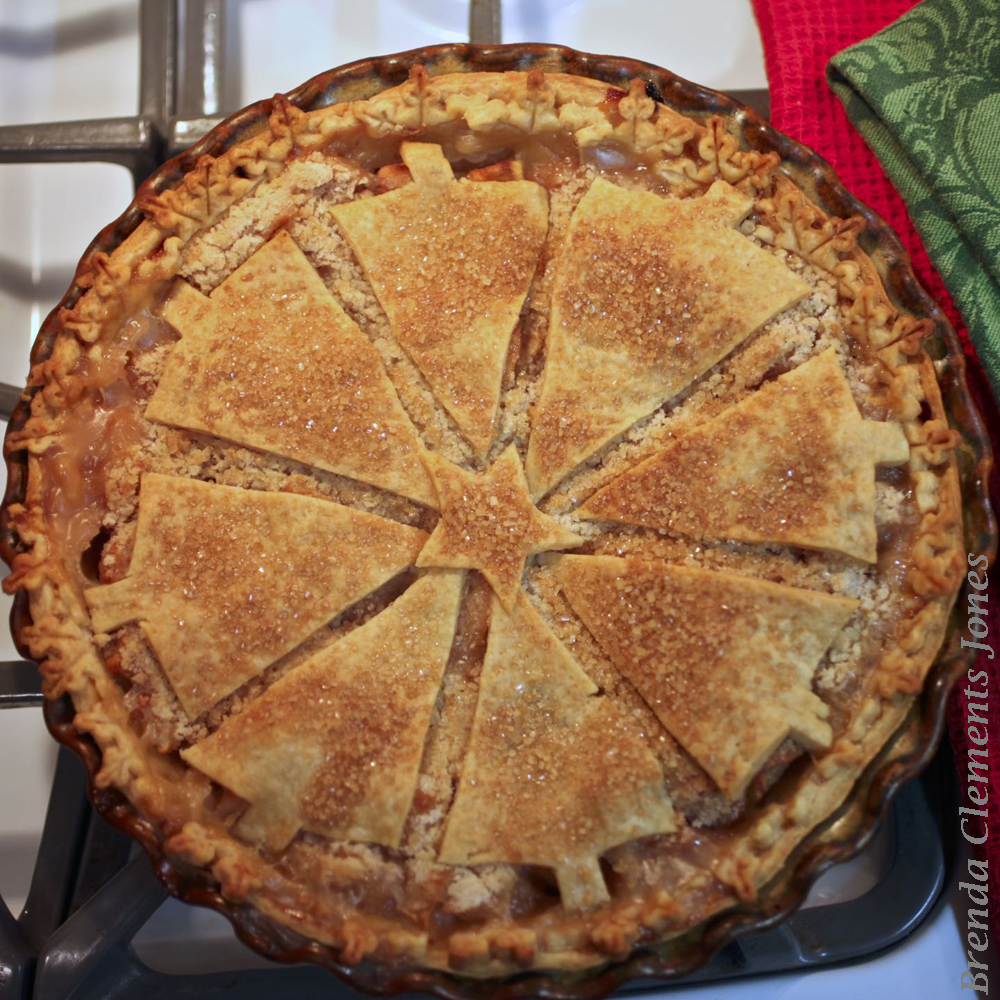
How amusing to celebrate, math and baking, together for the sake of Pi Day. Fun to approach mathematics with sense of humor. Pies being thrown into the mix for the sake of pi. In order to recall the never ending digits used to express the mathematical constant, there are mnemonic poems called piems (combining the words pi and poems). The number of letters in each word represent the corresponding digit of pi.

This, a piem written by Dmitri Borgmann is a fun example. It represents the first 30 digits of pi 3.14159 265358979323846264338327.

Now, a moon, a lover refulgent in flight,
Sails the black silence's loneliest ellipse.
Computers use pi, the constant, when polite,
Or gentle data for sad tracking aid at eclipse.

And again, Happy Pi Day!

Purple Deadnettle Revisited

If you haven’t noticed it yet, take up an image, keep it in mind, watch for it. It’s out there. Even now.

Purple Deadnettle (Hamamelis virginiana) is a member of the mint family. Its square stem is a sure sign of that heritage. It’s an herbaceous plant not native to North America but to Europe and Asia. It is certainly invasive but can easily be pulled thanks to shallow roots.

Being an annual winter weed, Purple Deadnettle quickly takes over farmer’s fields turning them into colorful and, to my eye, beautiful fields. And why the name, Deadnettle? That name is in reference to the resemblance of the leaves to leaves in the Nettle family and their stinging hairs. However Purple Deadnettle leaves do not have stinging hairs. They are safe, or “dead,” and not a problem to touch.