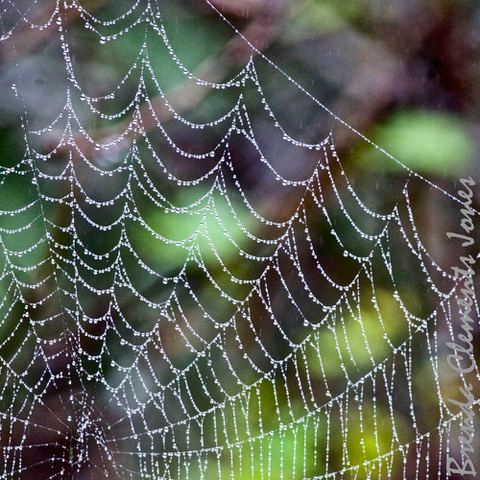
A Decoration By An Orb Weaver

October 21, 2026

Orb-weaver Spiders seem to enjoy being on my back porch. And to my way of thinking, they help decorate for Halloween. Spinning their flat, wheel-shaped circular webs, making the beginnings of a haunted house look.

Orb-weavers seem to be everywhere, their family of Araneidae includes the most widely distributed spiders in the world.

_______________________

If you would like to receive my daily blog posts by email, sign up here!

Bumblebee

September 27, 2026

On Goldenrod (Solidago), a Common Eastern Bumblebee (Bombus impatiens), getting energy from nectar and pollen. It’s also collecting pollen in pollen baskets, or corbiculae. They appear to be quite full, those orange puffy looking things on both back legs. The pollen is stored for the trip back home, to feed the hive’s larvae.

Gentle creatures that don’t sting unless provoked, and only females, queens and workers, have stingers.

_______________________

If you would like to receive my daily blog posts by email, sign up here!

A Hackberry Emperor

September 19, 2026

A Hackberry Emperor Butterfly (Asterocampa celtis), with a wingspan of between 1.25 to 2.875 inches

As adults they seldom seek flowers for nectar, but are drawn to sap flows, rotting fruit, animal droppings and mud puddles which provide them with needed salts and minerals. One might also land on your arm seeking sweat.

_______________________

If you would like to receive my daily blog posts by email, sign up here!

Ailanthus Webworm Moth

September 17, 2026

Another creature that looks like it’s all set for Halloween. The Ailanthus Webworm Moth (Atteva aurea).

The host plant of this moth, almost exclusively, is the invasive, Tree of Heaven (Ailantus altissima). So it is doing no harm. As an adult it seeks the nectar from a variety of flowers. This moth is diurnal, or active during the day. The long thin look happens when the moth wraps its wings tightly around its body. Its length is about 0.4 to 0.6 inches, and it has a wingspan of around 0.5 to 1.25 inches.

_______________________

If you would like to receive my daily blog posts by email, sign up here!

The Orange Assassin Bug

September 10, 2026

A goofy looking creature, a true bug, making an appearance as if it’s all set for a Halloween party. An Orange Assassin Bug (Pselliopus barberi), found across the eastern and central United States.

They eat creatures in our gardens, helping us as they do. Consuming aphids, leafhoppers, caterpillars, whiteflies, thrips, spider mites, armyworms, and beetles. They themselves don’t eat any plant material.

These bugs are not going to seek you out, but don’t pick them up. They are all set to defend themselves, by biting if you do. Its bite can be quite painful due to injection of digestive enzymes used to control their prey. This causes a sharp, burning sensation in humans. So treat them with respect. Don’t pick them up.

_______________________

If you would like to receive my daily blog posts by email, sign up here!

Late Purple Aster

September 9, 2026

Late Purple Aster (Symphyotrichum patens) blooming from late August into October with flowers that are just barely 1.25 inches across. With light blue to lavender ray flowers (florets) and yellow disk flowers (florets). The disk florets gradually turn to a dark cinnamon color as they age.

These Asters can be found from southern Maine, down through the south and west to the eastern part of Texas. They’re blooming right now along trails up here in the mountains.


A Red Admiral On Goldenrod

September 8, 2026

A Red Admiral (Vanessa atalanta) striking a pose for my camera.

The Red Admiral’s choice is of tree sap, rotting fruit and bird droppings for their content of key salts, amino acids and minerals. When these are not available the butterfly will seek out the nectar of flowers. This one is eating the nectar of Goldenrod (Solidago).

_______________________

If you would like to receive my daily blog posts by email, sign up here!

Dancing Along The Trails

September 7, 2026

When I see these beautiful little sunflowers, they make me think they’re dancing along the trails where they live. Joyful flowers, Woodland Sunflower (Helianthus divaricatus).

A Perplexing Bumblebee (Bombus perplexus) taking in some of the autumnal nectar of a Woodland Sunflower.

They’re native to southeastern Canada, and the north-central and eastern United States. Growing to 7 feet tall, its flowers are 2 to 4 inches across. Their underground system is roots and rhizomes, enabling them to create colonies. Bees, butterflies and other insects are attracted to their flowers, particularly as autumn marches on. Birds and small mammals enjoy the seeds.

_______________________

If you would like to receive my daily blog posts by email, sign up here!

Closer Look At An American Painted Lady

September 6, 2026

Like many butterflies, the closer one looks the more details are revealed. This is the same species of butterfly that I posted yesterday, an American Painted Lady (Vanessa virginiensis), in a dorsal, or wings open, or upper side view.

This a ventral, or wings up, or under side view. Quite a change from the dorsal view. This view provides eye spots to startle predators.

And here again the dorsal view, with sunlight shining through. Sunlight can change the look of everything when looking at a butterfly.

_______________________

If you would like to receive my daily blog posts by email, sign up here!