The Pink Clubhouse. Stellafane Amateur Telescope Makers Convention. A big wonderful Star party. The convention is usually scheduled over the weekend of the new moon closest to the height of the Perseid meteor shower. The first Stellafane Convention was held in 1926 and has been held each year since with the exception of 1949 – 1953 and 2020. It’s located on Breezy Hill in Springfield, Vermont. I’ve been to 18 or 19 of these conventions. So many telescopes, so many meteors, so many good times.
Though the maps show me as being in the winter range of the Purple Finch (Haemorhous purpureus) I seldom see any. But yesterday was my lucky day. There were two males and a female at one of my feeders. Black oil sunflowers seeds are on the top of the list for what they like at the feeder and that’s something that is always out there for anyone that might be hungry. Here they are, enjoying the feast, left to right, female Purple Finch, male Purple Finch, in the blur in front, a White-throated Sparrow, and on the right another male Purple Finch.
And here, a male in front and a female in back. Females and immature Purple Finches are brown and white. Mature males are what I would call raspberry red but certainly not purple.
The title of today’s blog post brings to mind a movie that I recently watched, “Frogs” which is a 1972 horror film that was shown on Svengoolie. Like nearly all of Svengoolie’s movies, this one was certainly not scary but then, I promise you, this post will not be scary either unless you are totally creeped out by my friends, the frogs.
The weather last night lived up to predictions with lots of high winds and eventually, rain. After climbing into bed I thought I heard a, “Clack, clack!” The sound of Wood Frogs (Lithobates sylvaticus). They’re charming little frogs with a bandit like masks. Their coloring varies from brown, red, green, or gray. That seems to be something that often happens with frogs. Look for their color pattern but not necessarily their exact color. Sure enough as the wind died down a bit and the rain started, I heard that, “Clack, clack!” more and more. Frogs seem to love getting rained on. On through the night. All night long. Into the daylight hours they sang their song.
Thus the start of mating season for Wood Frogs. Males seek out vernal pools with the hope that those pools will retain their water until their tadpoles can mature, till the end of June, which explains their early mating season. Their clacking is an invitation to females to come to mate. Out from beneath the leaf litter where both males and females have spent the coldest of the winter. Soon I’ll be seeing Wood Frog egg masses in my little pond.
Eastern White Pine (Pinus strobus). A native conifer that I often see up here on my mountain. It grows in the woods and we’ve planted and grown a few as Christmas trees. It’s a favorite of some as a Christmas tree, with it’s soft needles but I much prefer the very stiff and sharp needled, rigidly branched, but not user friendly Colorado Blue Spruce. In the northeast the Eastern White Pine is known to be the tallest of trees. They can reach heights of up to 150 feet, and can live 200 years with a maximum age sometimes surpassing 450 years.
White Pine is found in extreme southeastern Canada and the northeastern US down through the Appalachian Mountains into northernmost Georgia. It’s a tree that likes to have full sun but will get by with a daily dose of four hours of direct, unfiltered sunlight. Its needles are in bundles, called fascicles. Each of those fascicles contains 5 needles. Those needles generally range from three to five inches long.
The pinecones of Eastern White Pines that are generally noticed are the female cones. They are 3 to 8 inches long, cylindrical with a slight curve, hang downward from branches and contain the tree’s seeds. These cones mature in 2 to 3 years and after shedding their seeds the cone will drop to the ground.
Pitch Pine (Pinus rigida) is native to eastern North America, or more specifically, southern Maine to New York, south to Virginia and southern Ohio, and in the mountains, eastern Tennessee and Kentucky, northern Georgia, and western North and South Carolina. A medium sized pine with tufts of needles growing in random spots on its trunk. Often contorted in appearance. Needles frequently in bundles of three, with a length of three to five inches long. And those pinecones, ever so pretty.
Summer, and rabbits are seen often. Winter, and the sight of a rabbit is a rare thing. A time to stop and take notice. If you see a rabbit in Virginia, more than likely it is an Eastern Cottontail (Sylvilagus floridanus).
Rabbits don’t hibernate. But during the winter they are most active during dusk and dawn, which might explain why I seldom see them. In order to keep warm they retain a thicker layer of fur, build up a layer of fat, and seek out a burrow that another animal has created. A place to escape to, to keep warm. They change their eating habits during these cold months. Switching from a summer diet of grasses, clover and berries to buds and twigs of bushes and trees, and bark of sumac bushes and trees such as birch, willow, and oaks.
It snowed up here a couple days ago and along with it I got to see two rabbits. Excitement! The whole family stopped what they were doing to catch a glimpse.
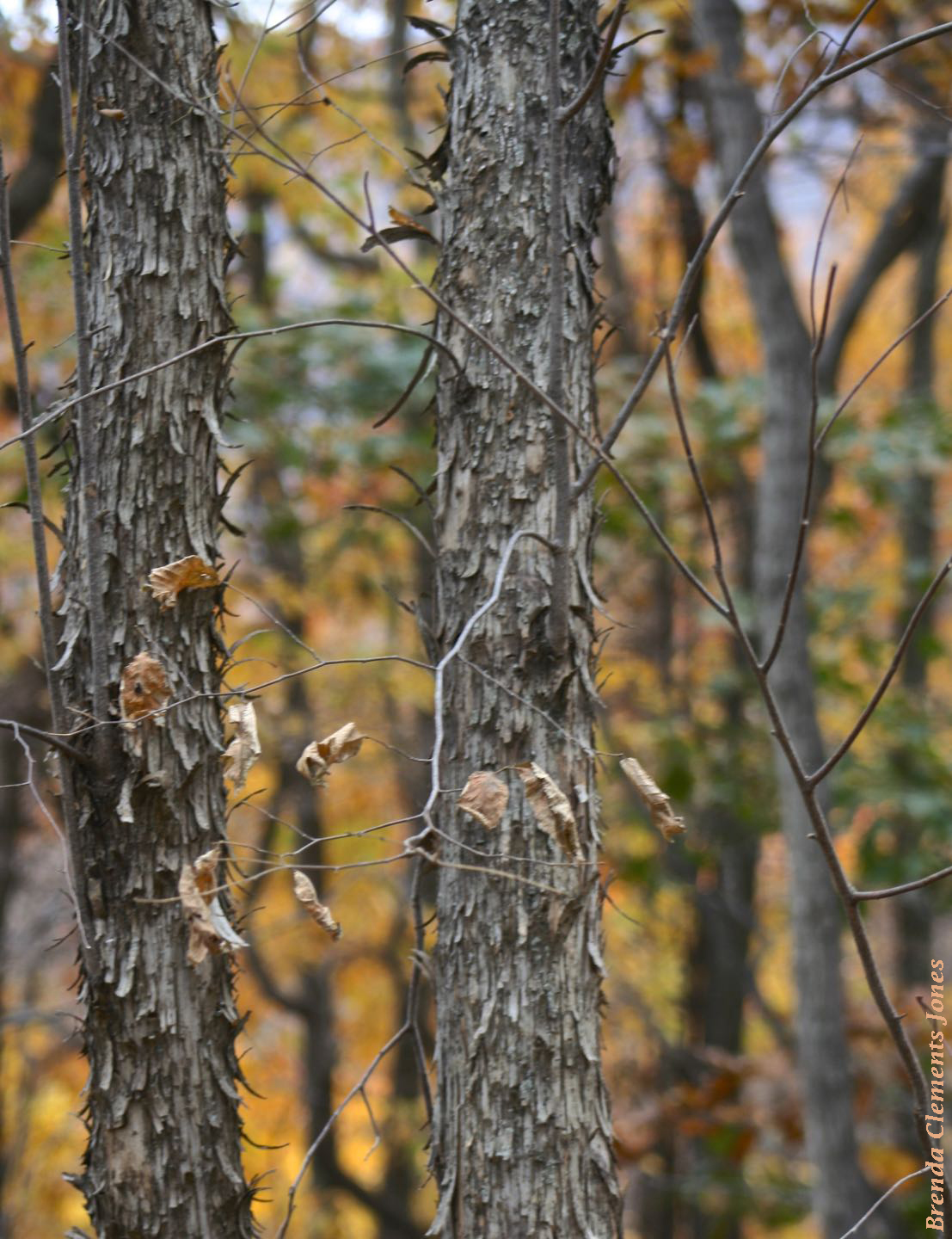
It doesn’t happen often. Deciduous trees that hang onto their leaves through the winter, marcescence. These trees fail to create the abscission layer at the base of the leaf stem, that is, the layer that helps the plant release those leaves (also the layer that will initiate the release of flowers or fruits). It will happen in some species of Oak trees, Eastern Hophornbeam, American Beech, and Hornbeam along with a few others. Those leaves hang on, but come spring, new growth will push the old leaves off the tips of the branches to the ground. In the photo above, taken today, a White Oak (Quercus alba) shows off its marcescent leaves.
Purple Coneflower (Echinacea purpurea). Native to central to southeastern United States. Pollinators love the flowers. Leave the seedheads over the winter for Goldfinches who will gather for a snack of seeds. And then for the math/nature nut there is the Fibonacci spiral of the disk florets that become those seeds.
The Snowdrops (Galanthus nivalis) have emerged at my back porch. Not blooming yet, but it’s soon to happen. This is what they looked like this afternoon, thoroughly enjoying the odd warmth of this mid-February day.
Native plants are a TOP PRIORITY in my gardens but there are some that, because of sentimental value, and so long as I find they are not invasive or create some other problem, become part of the plants that greet me in my yard. These Snowdrops are not native to North America, but otherwise fit that bill, both in having sentimental value and being well behaved. Within a few days a single bloom will have this look.
And a grouping will bring me great pleasure as I step off that back porch, with care. Of course they’re not really snow, but maybe that will happen too. If it does, my camera and I will be ready.