Hooded Warbler

Hooded Warblers (Setophaga citrina) have been delighting me here in the mountains for many years. They spend the breeding season in eastern North America, and the winter in Central America and the West Indies.

If you feed the birds during the summer, these birds generally won’t come to your feeders. They spend all their feeding moments gleaning insects and spiders from the leaves of the dense understory. And occasionally showing off by catching a flying insect in midair.

My strategy to get frequent glimpses of these beautiful birds is to provide them with a birdbath, including one that has a dripper. The bird at the birdbath in the picture above is a female Hooded Warbler looking a bit disheveled after taking a dip.

And here a male Hooded Warbler considers taking a dive from the dripper into the water.

And here he is dripping wet. Believe me, birdbaths are quite the draw for birds. My birds really need a birdbath, for my sake.

Pickerel Frog

A pond will attract some fun creatures. Even a small man-made pond. Immediately after the pond at my cabin was put in, frogs began arriving. One species of frog that visits is a Pickerel Frog (Lithobates palustris).

A word of caution. The pickerel frog is the only poisonous frog native to the United States. You may enjoy picking up frogs but leave this species alone.

Sitting on the edge of the pond, a Pickerel Frog is perfectly still, as if to say, “You can’t see me!” Just waiting for its dinner to come by. Waiting to scarf down a meal. It could be an ant, a spider. Or if a beetle or some bug or other invertebrate were to come by it could be quickly be eaten by the hungry frog.

Caught by surprise the Pickerel Frog will jump into the pond to escape a predator that might come along. Predators include birds, snakes. And of all things, bull frogs and green frogs.

_______________________

If you would like to receive my daily blog posts by email, sign up here!

Great Spangled Fritillary

One of many species of Fritillary that depend on native violets as their host plant, Great Spangled Fritillary (Speyeria cybele). They’re seen in the central and northern United States and southern Canada sporting a wingspan of about three inches.

Many adult butterflies have a very short life. In contrast, adult Great Spangled Fritillaries live from June to September. In early September they will mate. Females will lay their eggs near or on native violet plants.

Right after hatching the larvae will tunnel into the soil seeking a place to spend the winter in a state of diapause or “hibernation.” Come spring they’re close to where those native violets will be growing, ready to provide nourishment for the caterpillars. Keep in mind violets, that pop up in your garden, grow in your lawn, the Fritillaries depend on them.

Violets for the Birthday Girl

She’s celebrating her 104th birthday. Absolutely marvelous. She’s part of an amazing family. A family that brings love to everything they do. And she loves Violets. So Violets it will be.

There are somewhere between four hundred and five hundred different species of Violets in the genus Viola, and those Violets are scattered all over this planet.

I’m really pleased to find many many different species of them here on my mountain, up in Shenandoah National Park and other places that I roam.

violet leaves

I’m thrilled to find an unknown leaf, an unknown flower and Violets always surprise me with their variety.

There is even at least one small shrub in the genus Viola which grows in Portugal. Most other species are either perennial or annual plants.

I don’t think I’ll be getting to Portugal anytime soon but that’s fine. There’s so many Violets here to keep me busy with finding, photographing and identifying them.

Keep in mind as you’re tending your gardens to leave some of the Violets. They’re beautiful and they are depended upon by many of the Fritillary butterflies as a primary host plant.

Sending loads of Violet thoughts and many hugs to you, birthday girl!

Red-spotted Purple

Red-spotted Purple (Limenitis arthemis). With a wingspan of three to three and a half inches. Looking quite handsome with its iridescent blue with tiny orange spots on the dorsal (top) side of its wings. At this point I have to mention that this butterfly is on Butterfly Bush. BUT this plant is NOT in any of my gardens. As an invasive it will take over places where native plants could be growing and benefitting our natural world.

It’s the great impersonator. The Red-spotted Purple butterfly mimics the Pipevine Swallowtail butterfly. And not stopping at that, the larvae quite convincingly mimics bird droppings.

Preferred host plants of the Red-spotted Purple are a wide variety of trees and shrubs including birches, aspens, wild cherries and many species of the willow family. The adults feed on an occasional flower, as well as damp soil and puddles, carrion, dung and rotting fruit. One of those butterflies.

In Defense of Poison Ivy

I know, I know. I understand. It grows where I don’t want it. The NERVE. It makes me itch just to look at it and heaven forbid if its oil gets on someone else’s sleeve and that sleeve brushes against me. But Poison Ivy is a native, and native birds love the berries. Afternoon after afternoon I watch as Pileated Woodpeckers and Yellow-shafted Flickers feast on the white berries of Poison Ivy. Not such a wicked plant if you allow it to grow in the woods in its own territory. Lesson learned by yours truly. Leave it be if it is not in your gardens. The birds love it.

American Lady Butterfly

During the summer while my volunteer White Wood Asters are blooming I can count on seeing bunches of American Lady Butterflies (Vanessa virginiensis) sipping the nectar. I see there are oodles of larvae host plants listed for American Lady Butterflies. Asters are one of the plants listed.

Purple Coneflowers will also attract them and make for a fun picture with the American Lady’s intricately designed ventral (or bottom) side of their wings visible.

Here the American Lady is on the blooms of Bugle Weed. This beautiful butterfly enjoys the nectars of flowers but also it’s attracted to the juice of rotting fruit and tree sap. I’ve been able to entice American Lady Butterflies to my back porch by putting out fruit that will eventually go into the compost. It’s fun to experiment and see who shows up.

Scarlet Beebalm

Soon to be glowing red in a big swath of my garden. Scarlet Beebalm (Monarda didyma). Native to eastern North America.

Attracting hummingbirds, butterflies and bees. Fluttering, buzzing and humming.

Spicebush Swallowtails (Papilio troilus) aren’t the only butterflies that enjoy the nectar and help pollinate the Scarlet Beebalm. Oodles show up.

A carefree plant that fills the space it is provided but doesn’t jump to other gardens. Well behaved. And for gardeners who would rather not spend time weeding. The plants grow into a dense little “forest” of fragrant leaves crowding out any weeds that might be tempted to intrude.

And those Ruby-throated Hummingbirds. So entertaining. These flowers just seem to be designed specifically for the hummingbirds.

Joy in the summer. If I can’t have my winter, and my snow, I’ll be happy to take the brilliant colors and the wonderful critters.

Western Springbeauty

A couple months ago (April 12, 2021) I wrote a blog post on Virginia Springbeauty. Sometimes there is a plant or a bird that has an almost twin on the other side of the continent. That’s the case here. Virginia Springbeauty (Clintonia virginica) is native to eastern North America, and it has an almost twin, Western Springbeauty (Claytonia lanceolata), native to western North America. That’s it in the photo above. I took this photo while enjoying the wonderful Southwest, and Zion National Park.

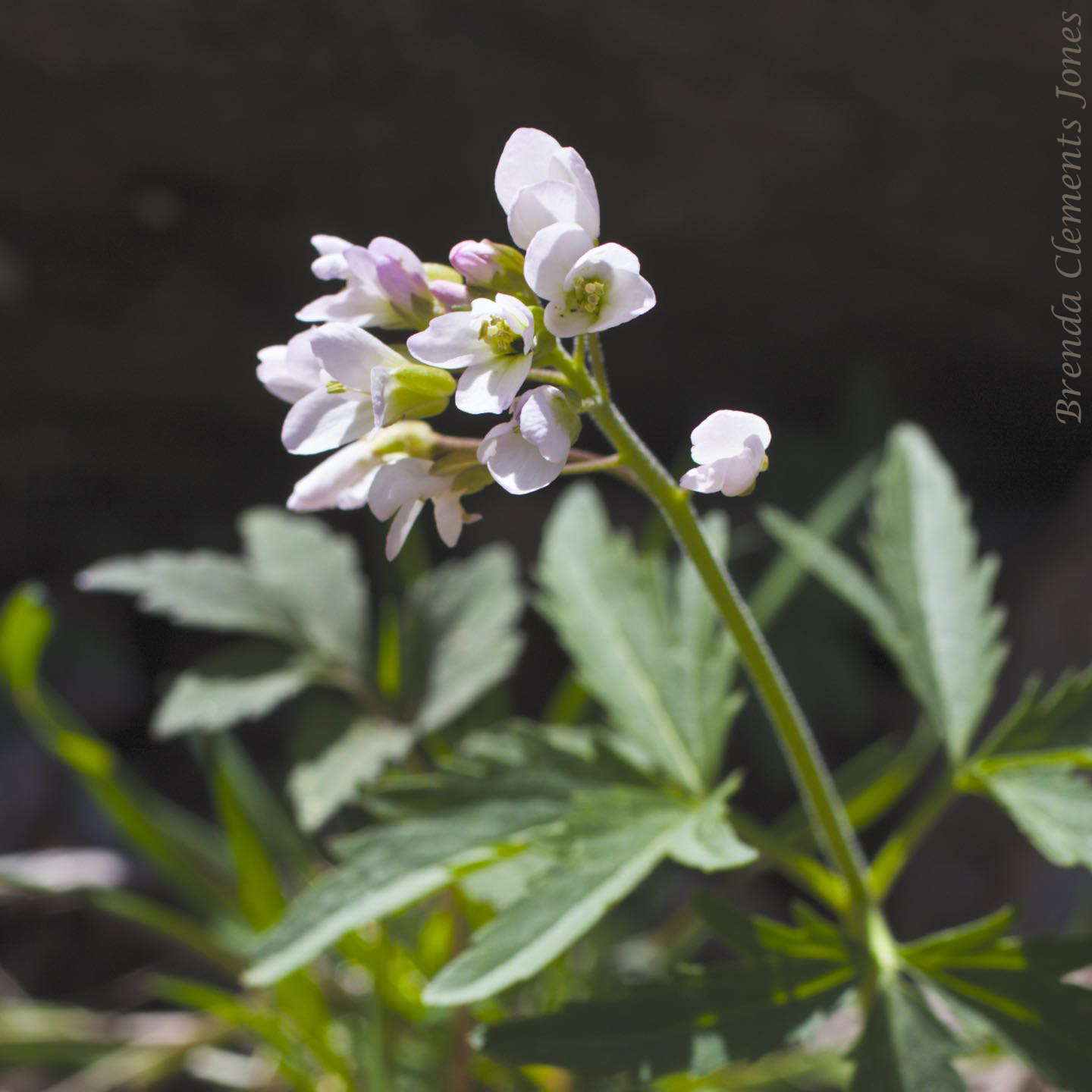
This image, above is Virginia Springbeauty, native to eastern North America. The leaves of Western Springbeauty are wider and store moisture. The leaves of Virginia Springbeauty are more grass-like. I LOVE visiting the Southwest and to find things that remind me of home makes it extra special.

Elderberry

Lots of Elderberry Bushes (Sambucus canadensis) are in bloom up here in the mountains. On a trip to Florida in early May, I saw many in bloom down there along the roadways, making me feel at home. Now I’ve got Elderberries blooming at the edge of the woods outside my cabin too thanks to Saint Isidore Homestead & Permaculture at the Greene Farmer’s Market.

Many species of bees, flies and beetles collect pollen from the Elderberry blooms and a couple species of bees build nests for their larvae in the bushes. Lots of birds eat the berries including the Eastern Bluebird, Northern Cardinal, Catbird, Mockingbird, Robin, House Finch, Wood Thrush, Red-eyed Vireo, Cedar Waxwing, and White-throated Sparrow.

Keep in mind if you’re interested in eating the berries (drupes) of the Elderberry Bush, they are poisonous unless cooked, then they are safe to eat.