Carolina Wrens – 2nd Brood

Momma Wren waiting for her dinner delivery.

This is the second brood for this pair of Carolina Wrens (Thryothorus ludovicianus). As is normally the case, they’ve gone to a second location, abandoning their previous successful spot, which was in the antique graniteware coffee pot hanging from the porch ceiling. Now they’re on the back porch in a basket that is also hanging from the ceiling.

While Momma Wren incubates the eggs, Dad delivers food to her.

Breeding pairs of Carolina Wrens are monogamous, likely staying together for years. Depending on how far south the breeding pair is, they will have two to three broods per breeding season. The further south, the more probable it is they will have three broods.

I know the Carolina Wrens as entertaining, noisy little creatures. It’s the male that does the singing while both of them will do the chattering and scolding that I enjoy so much.

Hummingbird Moths

Hummingbird Clearwing Moth (Hemaris thysbe)

There are four species of Hummingbird Moth in North America, members of the sphinx moth family (Sphingidae). Sometimes they get mistaken for baby hummingbirds. But they are moths that collect nectar during the day. One of the species, in the photograph above, is the Hummingbird Clearwing Moth. This moth has a golden back, a chestnut-brown abdomen, and pale legs.

Snowberry Clearwing Moth (Hemaris diffinis)

Another species of Hummingbird Moth, Snowberry Clearwing Moth, is pale yellow and black, with a black line running through its eyes and down its sides, and it has black legs.

Hummingbirds that have fledged, or just ventured from their nest for the first time, are the same size as adult hummingbirds. Those that have just fledged from their nest, the youngest that you’ll see flying around, are the very same size as their parents, measuring in at about three inches long. These moths are about one and a half inches long. Not baby hummingbirds but Hummingbird Moths.

American Germander

Native to all 48 of our contiguous states and a good bit of Canada too. An herbaceous perennial in the mint family American Germander (Teucrium canadense).

Opposite leaves, squarish stem. Typical of the mint family.

You’ll find Bees of the long-tongued sort, Hummingbird Moths, and Hummingbirds them selves, as pollinators. And if you’re looking for a word to impress someone, the flowers are said to be zygomorphic. Meaning there’s only one line along which the flower can be divided into equal halves – creating a mirror image.

American Germander being in the mint family, I would think that the plant’s leaves are edible. But first off, the leaves are bitter. That certainly helps if you have problems with critters browsing in your gardens. And as is so often the case with plants that surround us, it presents a danger. American Germander has high levels of neoclerodane diterpenoid, which causes liver damage. Look but don’t eat!

Yarrow

Yarrow (Achillea millefolium). The temperate areas of the Northern Hemisphere in Asia and Europe and North America claim Yarrow as a native herbaceous perennial flowering plant.

It’s blooming right now in this area, looking a bit like Queen Anne’s Lace because of the large clusters of flowers atop the plant’s stems. But those clusters of flowers on Yarrow are quite an irregular grouping while the clusters of flowers on Queen Anne’s Lace is an impressive near perfect circle of blooms.

Sometimes in the autumn a Yarrow leaf will turn beautiful reds and yellows but all season long it has a lovely feather-like appearance. The plant is called the Spanish word for little feather, Plumajillo, in New Mexico and southern Colorado because of the feathery look of leaves.

The blossoms of the Yarrow are popular with butterflies, wasps, flies, and bees. 

I often see Crab Spiders on Yarrow too, waiting and watching for their next meal to come along.

I don’t usually notice the scent of flowers that only have a subtle fragrance. It takes a knockout aroma like Japanese Honeysuckle (Mmmmm!) for me to notice but I understand Yarrow has a nice, sweet aroma, much like Chrysanthemums. I don’t usually notice their fragrance either!

Wineberry

Such a conflict. They are an exotic invasive, aggressively growing where native plants would otherwise grow. Wineberry (Rubus phoenicolasius).

Wineberry is native to eastern Asia and was introduced to North America in the 1890s as a potential breeding stock for raspberries.

On the other hand, these berries are delicious. They are an ingredient for a wonderful sherbet. Much anticipated every year by my family. They’re soon to be ripe here on the mountain.

Also a marvelous topping for cereal. Making cereal a favorite breakfast.

Every member of the family loves these berries. The compromise solution, keep some, and make way for the natives by removing the rest of the aggressive plants. Oh I wish that were easy. They are (there’s that word again) ubiquitous.

Gaillardia

Here Gaillardias are growing wild in New Mexico, at Bandelier National Monument. A park I’ve visited many times. And hope to visit many more times.

And more Gaillardias growing wild at Bandelier National Monument. It seems they’re ubiquitous!

It amuses me. My Dad had a thing about digging up Dandelions in his lawn. He was always in a battle with them. That was in Maryland. My father-in-law also had a thing about digging things up from his lawn. The flowers he was in a constant battle with? Gaillardia. That was in New Mexico.

I love Gaillardias. But I must plant them, and care for them. I guess a weed is something that grows where you don’t want it to be.

Gaillardias are in the Sunflower family. Gaillardia is a genus of flowering plants that are native to the Americas. There are twenty-five to thirty species of Gaillardia, annuals, biennials, and perennials. There are also many cultivars.

Many pollinators are attracted to the bright colors of the blooms. Such as the Honey Bee in the previous image, and here a Carpenter Bee.

Butterflies love Gaillardia too. Here a Silvery Checkerspot is enjoying a Gaillardia in one of my gardens.

Red Currants

I put in two bushes of Red Currant (Ribes rubrum) last year that I purchased at the Greene Farmer’s Market from Saint Isadore Homestead & Permaculture. This year they both bloomed and now they have produced the most beautiful fruit. Little berries of the richest ruby red.

I put the bushes in with no plans for the fruit other than to appeal to my very fond childhood memories of summer family reunions in southeastern Pennsylvania with all my Mom’s sisters and brothers, their spouses, their children along with many other family, Grandmom and Grandpop and great aunts and great uncles, and cousins of various distances. First? Second? How many times removed? Happy memories that included seeing Red Currants looking so beautiful on their bushes, right next to where the guys played quoits.

Now that I’ve got the tiny fruit I find that they are delicious! I’ve searched for recipes and tomorrow I plan to make my very first batch of red currant muffins. Hoping they turn out well!

Oh and one tidbit of information that I just learned. Those dried currants that you find at the grocery store? They are not currants at all but small grapes which are dried to become what we know as dried currants. Who would have thought?

Brown Thrasher

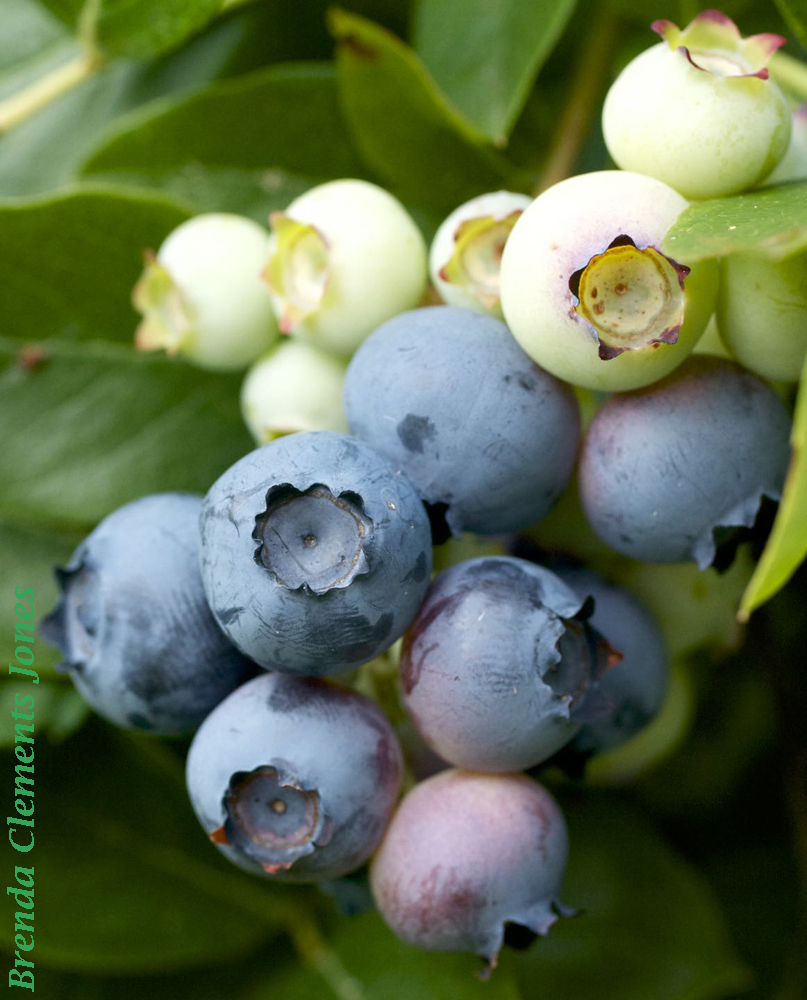
Brown Thrasher (Toxostoma rufum). Quite the handsome bird. It makes me think of a Roadrunner with its very long tail and long curved bill. They’re here during their breeding season but are year round in the deeper Southeast. The feeders here at my cabin don’t tempt them, not even the suet, but they love my blueberries. Down in Florida at my Mom’s feeders they are constantly eating the suet at her feeders. Omnivores, Brown Thrashers eat insects, berries, seeds and nuts, earthworms, snails, and an occasional lizard or frog.