-
Fourleaf Milkweed
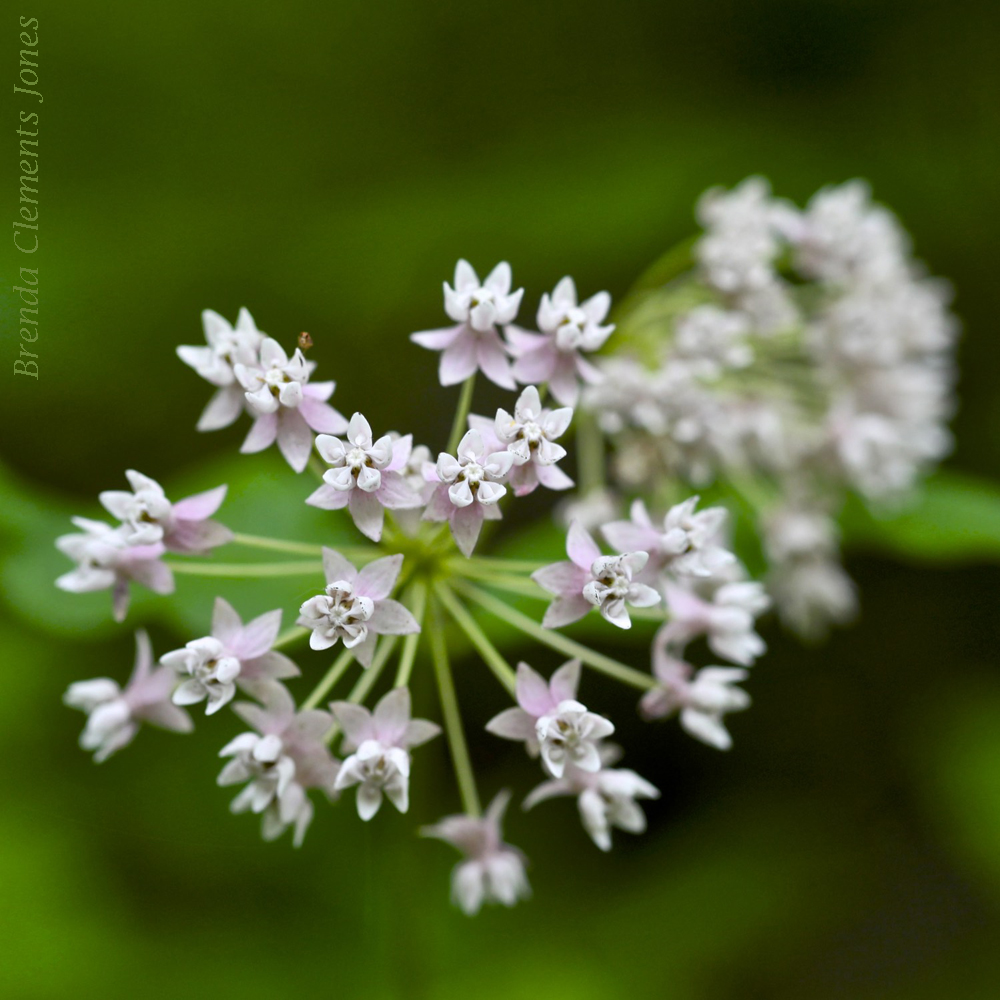
Fourleaf Milkweed (Asclepias quadrifolia). Blooming in the palest of pink, along the trails up here in the mountains, May to July. Providing nectar for bumble bees and other bees, flies, ants, wasps, butterflies and moths. One of the larval host plants of Monarch Butterflies. A perennial herb with a single stem emerging from a rhizome. Not…
-
Woolly Dutchman’s Pipe

Woolly Dutchman’s Pipe (Aristolochia tomentosa). A vine that grows vigorously with a mind of its own. A vine with a funny looking flower. It’s native to southeastern Canada and the eastern United States. This is a plant in the genus Aristolochia. Plants in this genus are larval host plants of the Pipevine Swallowtail Butterfly. I…
-
Butterfly Weed

An incredibly beautiful Zebra Swallowtail (Eurytides marcellus) on the aptly named Butterfly Weed (Asclepias tuberosa) which provides nectar to many pollinators. Native to much of the United States, from Maine to South Dakota to the desert southwest to Florida. Another pollinator that nearly matches the color of the Butterfly Weed, Great Spangled Fritilary (Speyeria cybele).…
-
Meteorological Summer

Happy first day of meteorological summer! With perfect timing, today the first ripe blueberries have been discovered on the bushes around my cabin. The blueberry season has begun. Mmmmm!
-
Black Huckleberry

It’s always fun to find a different native plant out in the woods. I never even knew that Huckleberries were actually a real thing until I found this bush. Black Huckleberry (Gaylussacia baccata). Along with this one, there are 3 other species of Huckleberry in this genus, Gaylussacia, which are found in eastern North America.
-
Another Visit By Adult Skinks
Here at my cabin I see juvenile Skinks with their brilliant blue tails quite frequently. Those tails are “detachable,” and if attacked by a predator the skink can release its tail, which will continue to wiggle, distracting that predator while the Skink vanishes from the scene. A new tail will regrow, taking perhaps 6 months,…
-
Oh Those Yellow Eyes

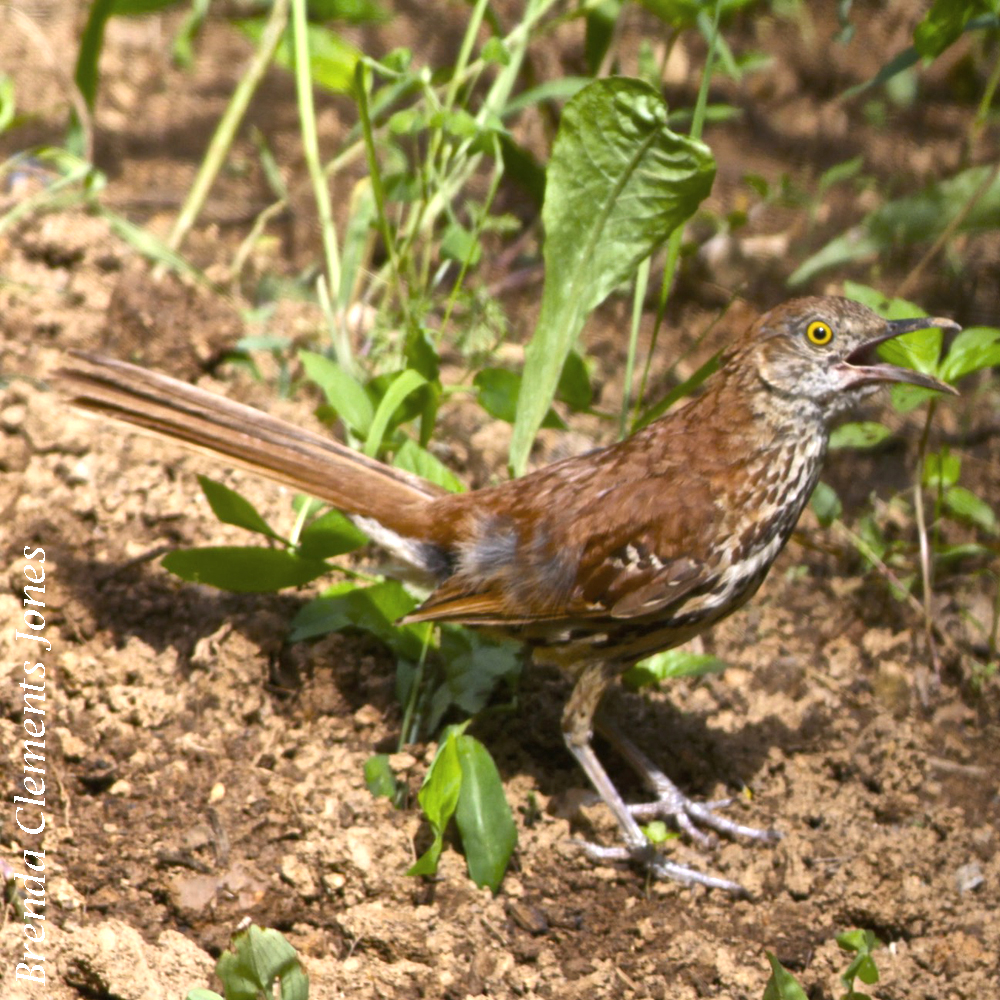
One more post on the Brown Thrasher (Toxostoma rufum) and, about those incredible piercing bright yellow eyes. As a hatchling the Brown Thrasher has blue eyes, as the bird grows the eyes change to ashen and then on to the yellow that you see in my photos of adult Brown Thrashers.
-
Another Brown Thrasher
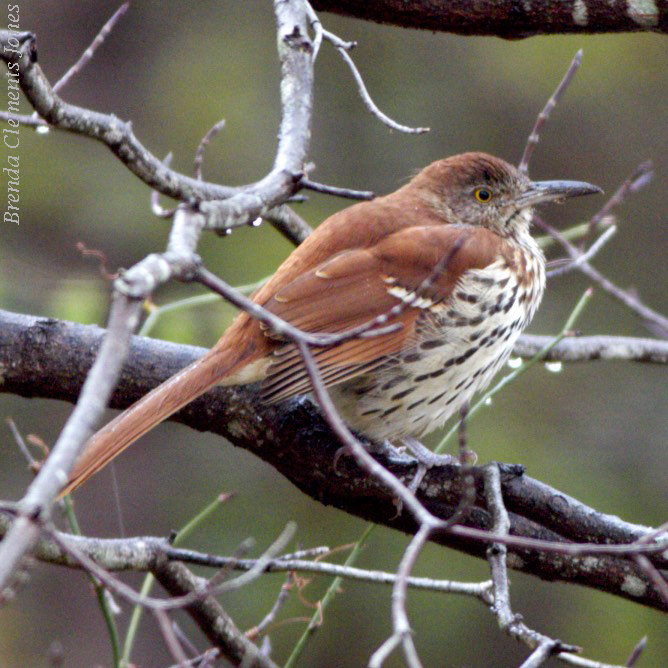
Last night I posted about Brown Thrashers and mentioned how much they remind me of Road Runners. Here’s one in a, “I’m NOT a Road Runner” pose. No doubt about it, definitely NOT a Road Runner!
-
Multiflora Rose

Multiflora Rose (Rosa multiflora) native to east Asia. These roses bloom right along with Blackberry bushes up here in the mountains. Often people will see the roses and mistake them for blackberry blooms. They do look a bit similar but there is a very easy way to tell the difference between the two. By their…