A favorite of mine, late May trailside. Golden Alexanders (Zizia aurea). The color might be the catch for me. Or perhaps it’s the tiny flowers arranged in flat-topped umbels.
A short-lived herbaceous perennial that enjoys moist soil, and full sun to part shade. I tried once, long ago to add it to one of my gardens with no luck. I think it’s time to try again.
In late spring nearlyevery year I’m treated to a remarkable visit. A Luna Moth (Actias luna) magically crosses my path.
Luna Moths are native to Eastern North America, clear to Texas, and including a great part of Southeastern Canada.
The Luna Moth has a wingspan of about four to four and a half inches. That measurement making it one of the largest moths in North America.
The adult stage of the Luna Moth’s life seems to have but one purpose, to reproduce. Both male and female moths have no way of eating, no mouth, no digestive system. Only living for a week to ten days. Such a brief existence as a truly exquisite adult.
I had no idea such a thing existed. A raspberry bush with such pretty flowers. Raspberry blossoms of a bright magenta rather than white. Being up on Skyline Drive at just the right time, during bloom time revealed this unusual plant to me. Purple-flowered Raspberry (Rubus odoratus).
Since it was growing in Shenandoah National Park, I knew it was native to this area. Sure enough it is a native deciduous perennial of Eastern North America. That was a signal to me. Get that plant for at least one of your gardens!
Now I have small bushes, still growing, getting bigger. They could possibly grow to be six feet tall and twelve feet across.
Autumn turns the leaves that resemble maple leaves into a golden hue. And surely you are wondering about the raspberries themselves. That is the downside of this bush. At least for humans. Everywhere I find the raspberries described as “insipid” or “somewhat dry, crumbly and unappetizing” but that is offset by the fact that the bushes are helpful to many birds, both game birds and songbirds. It’s also beneficial to butterflies and bees, and mammals both large and small. A good one to have.
I’ve only ever seen the caterpillar of the Baltimore Checkerspot (Euphydryas phaeton). Never the adult. That one sighting was an hour from my cabin at Buck Hollow in Shenandoah National Park. Since that brief observation I’ve learned that the main larval host plant of the beautiful Baltimore Checkerspot is White Turtlehead (Chelone glabra).
I’ve learned that the Baltimore Checkerspot is the state insect of Maryland. A state that means a great deal to me. So I’ve planted White Turtlehead in one of my gardens. Hoping it might bring me luck. And with that luck a Baltimore Checkerspot to my garden.
One of the Turtlehead’s pollinators is the bumblebee who uses brute force to reach the flower’s precious nectar.
My flowers are white while others of this same species sometimes have a slight hint of pink or lavender.
White Turtlehead is a herbaceous perennial, native to most of the eastern half of the United States. It prefers damp conditions such as stream banks where it grows two or three feet tall. Full sun to partial shade will keep it happy. Blooms arrive mid summer into early fall. And in the meantime I’m patiently waiting and hoping.
Hackberry Emperor (Asterocampa celtis). A butterfly that lives in a broad swath of North America. Most of the eastern United States, central Plains states, and the southwest mountains; northern Mexico.
Its larvae survives exclusively on the many species of Hackberry trees, trees in the genus Celtis.
Hackberry Emperors over winter as larvae curled up in a Hackberry leaf, which falls to the ground in autumn becoming leaf litter. A good reason not to rake up that leaf litter!
As an adult the Hackberry Emperor Butterfly eats fermenting fruit (or corn as in this picture), dung, carrion, and sips tree sap. They also wouldn’t hesitate to sip sweat from your arm to consume the salt.
One of my dear little friends sitting by the pond. Sitting perfectly still hoping that I continue on my way. Hoping that I don’t give away its position at the edge of the water. Silently telling me to go away. Green Frog (Lithobates clamitans). Living in the pond along with many other creatures. I haven’t checked lately to see what the status is, but there had been green frog eggs, wood frog eggs and the eggs of eastern red-spotted newts. I know that some have turned into tadpoles. Even the red-spotted newts will turn into tadpoles continuing as water dwellers before developing to their next life stage as a terrestrial (juvenile) eft, and then back to the pond growing into an aquatic adult. The pond also has a few aquatic adult red-spotted newts. That’s all that I know about right now. Quite a busy place for such a little pond. Insects — look out!
A native plant that is quite insistent. It keeps showing up in my gardens. With stems that are more like vines than stems, creeping along the ground. Stems that have little stickers. Stems that form roots when they touch the soil. Making its presence known. Dewberry (Rubus invisus) is native to the eastern and east-central United States. The flowers produce black or deep purple berries very much like the very closely related Blackberry bushes that grow wild and are also native. If I would just give it a chance it would give me berries. Lovely berries much like those on the Blackberry bushes.
I’m ready for an experiment. Let those vines grow under certain conditions. Just see what happens. See how the berries are. I’ve got my fingers crossed. Stay tuned.
Yellow-billed Cuckoo (Coccyzus americanus). A bird that I seldom see. In part perhaps because they will sit in dense shrubbery sitting perfectly still, like a frog that is trying to convince you that, “You can’t see me.” They do this as they are watching and waiting for a meal to come by. Few birds will eat hairy caterpillars but this doesn’t stop the Yellow-billed Cuckoos who will consume thousands of caterpillars per season. They also eat cicadas, tent caterpillars, webworms, katydids, crickets, and even frogs and lizards. They may hop to the ground to catch the frog or lizard that they spot, or fly from their perch to catch a flying insect, midair.
Flying to South America in the winter, returning late April to early May. I look forward to at least hearing the Yellow-billed Cuckoo this summer. Both males and females make a soft cooing sound which reminds me of a Mourning Dove. Another sound, to me a more distinctive sound, a hollow sounding, rapid, harsh, rattling ka-ka-ka-ka-ka-ka-kow-kow-kowp, kowp, kowp, kowp, slowing down at the end. A sound that I can’t say sounds like any other bird. It would be such a delight to see one of these Blue Jay sized birds, but knowing their shy nature I’ll be quite happy to at least hear one.
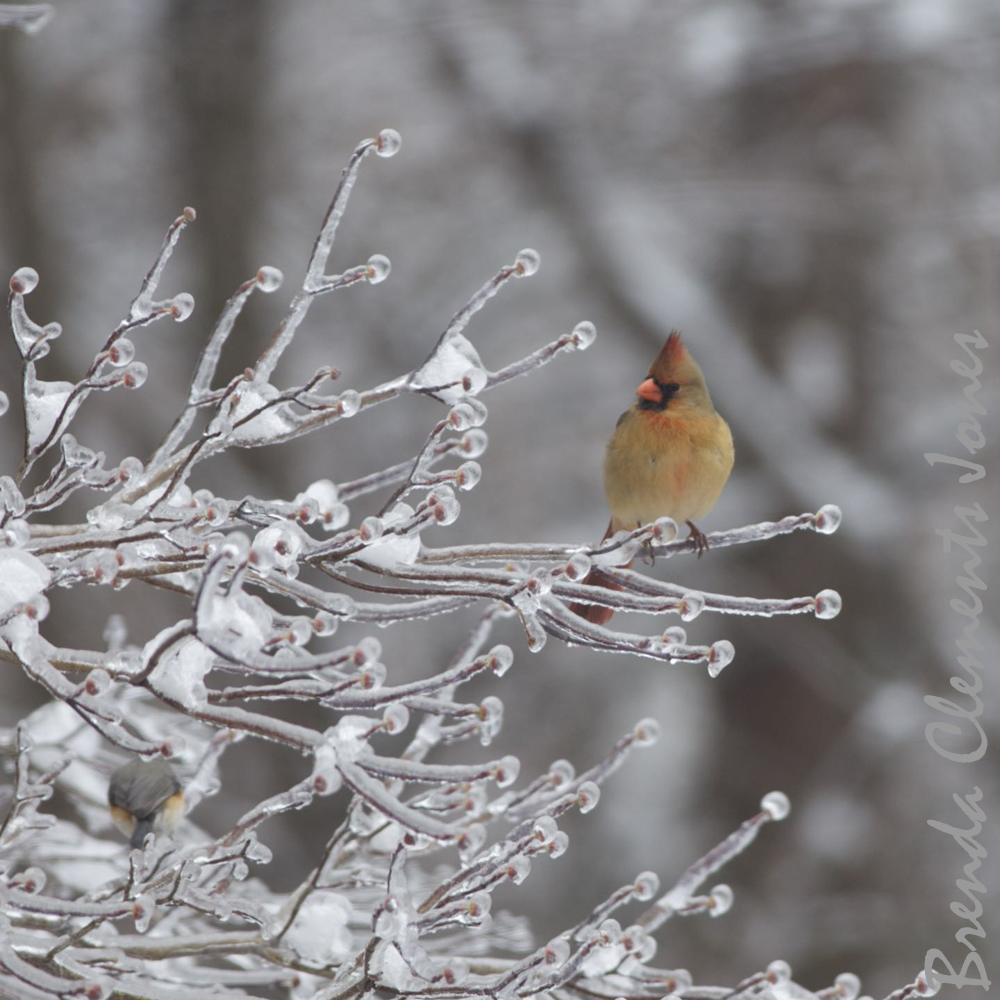
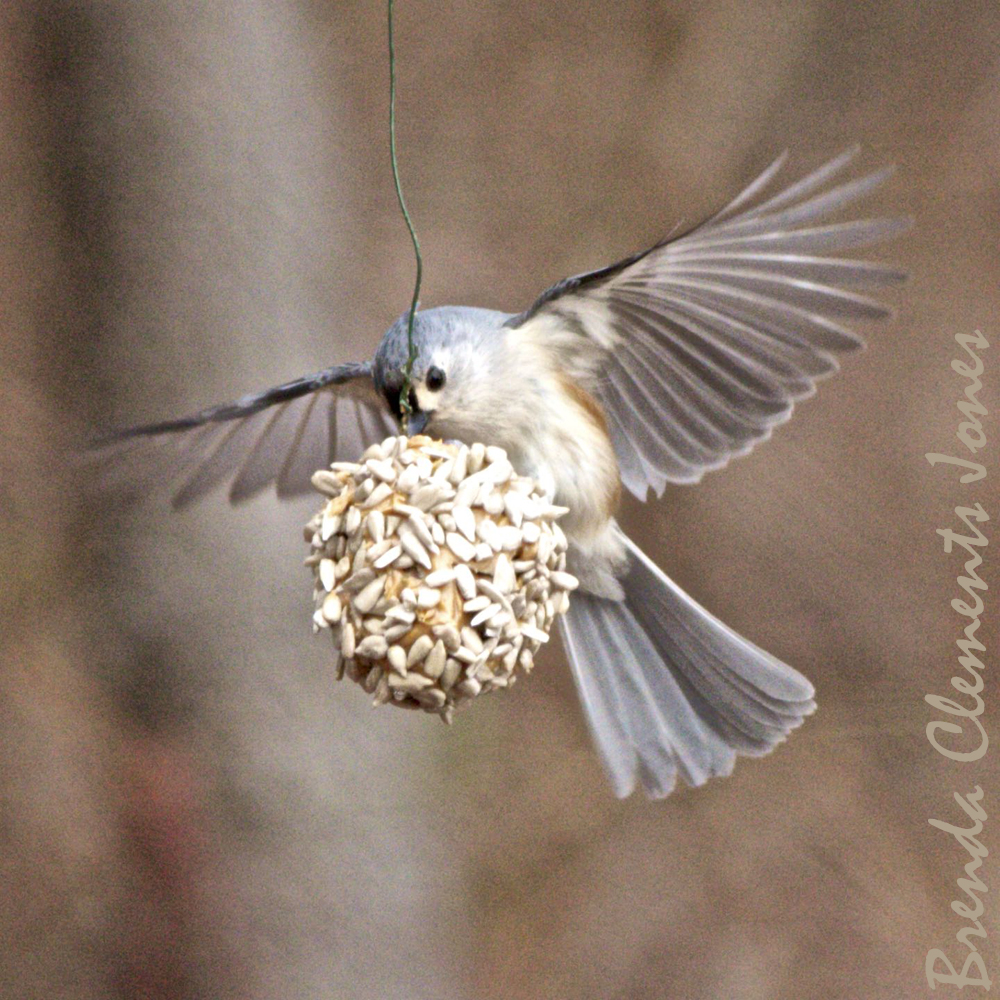
Every year it is always the same. I take great pleasure in feeding the birds and would do it all year long except there is the Bear (Ursus americanus) issue. They come out of their winter slumber focused on finding a quick meal. Though not the repast that would totally fill a several hundred pound bear, a chance encounter with a bird feeder would certainly be a great tidbit.
If and when a bear comes upon a bird feeder it will certainly think it is put out for bears. The bear may sit there and dismantle the feeder in a bear-like manner, totally destroying it in the process. OR the bear may venture into the woods with the prize. The snack to be eaten far from where it was found. Again that feeder will be demolished. Bears aren’t gentle.
The first sighting of a bear is my signal. A stop the bird feeding signal. I want my family to be safe and I want the bears’ families to be safe as well. Better that they don’t come by for handouts.
It’s been several years now since one of my favorite summer birds has come by for the season to brighten me. I would swear they are ventriloquists. Sounding like one was here but really there. Or sounding like one was high in the tree top but no one was there at all. And their sound. Cluck, cackle, click, gobble, chuckle, whistle. Never repeating a sound. Seeming to invent its own bird-words as time passed. I miss the Yellow-breasted Chats (Icteria virens) that always came to visit every summer.
Seems I would hear them whenever I was out. Surely they were greeting me. But clever in their hiding, I would rarely see them. Just a few times I was able to catch a glimpse and snap my shutter capturing one of them in pixels.
It’s early. There are many weeks until summer arrives. I’ll be listening. I’ll be hoping to get that happy whistle once again.